ADA Mobile Toilet Rental: Understanding Available Bathroom Room Demands
@conneramkj808
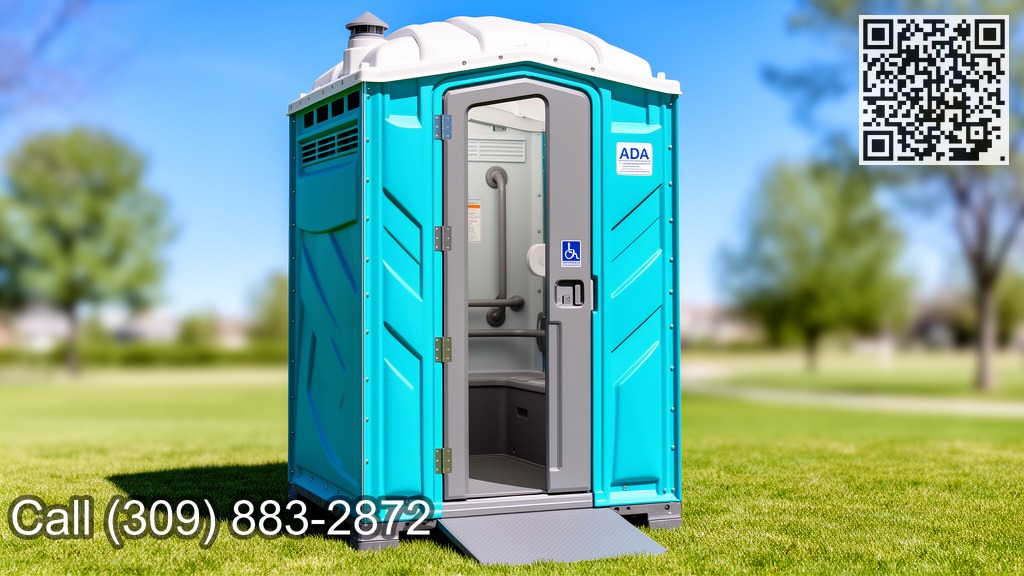
Renting mobile washrooms appears simple up until ease of access enters the conversation, and then it swiftly ends up being clear that "conventional plus one bigger unit" is not a real conformity approach. People typically request an ADA mobile toilet as if it were an item group you can mark off with a single call. In practice, accessibility depends upon more than the covering of the device. It depends on the variety of systems in the cluster, the path to the device, the entry, the interior clearances, and whether the setup benefits the person who really requires to utilize it.
That difference issues since portable restrooms show up in position where individuals have very little margin for aggravation. A wedding celebration visitor making use of a wheelchair can not just "improvise" with a confined unit at the much side of a sloppy field. A moms and dad assisting an adult kid with a wheelchair handicap at an area event needs room and a functional door strategy, not a good intent. On a long event day, a bathroom that is technically existing however virtually unreachable is not much far better than no washroom at all.
If you are preparing an ADA portable commode leasing, the safest way of thinking is to treat ease of access as component of website preparation, not as a device. The government baseline comes from the 2010 ADA Requirements for Accessible Style, as interpreted by the Access Board and the Department of Justice. Those standards do not just check out the commode component. They consider just how someone gets to the system, enters it, maneuvers inside it, and utilizes it with self-respect and independence.
The first question is not the model, it is the setup
A great deal of rental conversations begin with the unit itself. Is it an ada certified portable toilet? Is it among the bigger ada-compliant portable bathrooms? Does it have grab bars? Those are fair questions, but they are not nearly enough on their own.
Accessibility for portable bathrooms is assessed in context. If there is a collection of single-user mobile commode units, at least 5 percent of the systems in that cluster have to come. The Gain access to Board has actually explained that this applies also at short-term events. That factor captures individuals off-guard since momentary arrangements are often dealt with casually. The legislation does not treat them delicately just because they are short-term.
That implies a festival financial institution, a fairground lineup, or a temporary bathroom location at a public event requires scoping that make up obtainable devices in the collection. If someone orders 10 devices, the discussion can not quit at "we have restrooms on site." The cluster itself has to consist of the required easily accessible provision.
This is additionally where language can misinform people. Terms like ada handicap easily accessible portable restroom or ada easily accessible portable washroom are commonly utilized in the rental market, yet the valuable concern is not what the sales brochure calls the unit. The helpful concern is whether the provided unit, in its installed location, meets the appropriate ease of access requirements.
What the ADA is actually looking for
Portable washroom ease of access has a sensible logic behind it. A washroom is only accessible if an individual can approach it, enter it, turn or position inside it as called for, and use the fixture and sustains intended for risk-free transfer and stability. The criteria for that reason reach a number of different components of the experience.
The device have to be understood the International Symbol of Ease Of Access. That sounds small, however it matters. At crowded occasions, people ought to have the ability to situate the available unit quickly without uncertainty. A person ought to not require to open numerous doors or ask staff where the usable toilet is.
There has to additionally be an easily accessible path to the device and an easily accessible entryway. This is where lots of otherwise good configurations stop working. A compliant-looking system put beyond ruts, deep gravel, a steep grade, or a lip that needs support is an issue. If ramps or touchdowns are needed, they should comply with ADA technological demands as well. The path and the entryway are not optional side problems. They become part of the accessible restroom.
Inside the system, the technological demands for toilet spaces still apply. That consists of indoor clearances, transforming room, door steering clearances, and the applicable grab-bar and water-closet clearance policies. Those features are the distinction between "bigger than typical" and actually functional. I have seen individuals presume that size alone solves ease of access. It does not. A space can be visibly bigger and still stop working the handling or transfer needs that the ADA addresses.
Why placement usually causes the greatest problems
If there is one lesson that shows up over and over in mobile toilet planning, it is that a compliant device can be threatened by a negligent website plan. You can get ada certified available portable restrooms from a respectable carrier and still create a poor outcome if the ground conditions and approach are ignored.
Picture a short-lived occasion on lawn after two days of rain. The rental business provides an ada mobile commode that, theoretically, is the best type of device. The occasion staff positions it next to the rest of the bank, yet the only course crosses soft soil that gets at wheels and walkers. The accessible system exists, labeled, and difficult for many users to get to separately. Nothing concerning that end result really feels rare to people that function occasions. It happens since availability obtains talked about late, after power, fencing, phase gain access to, vendor positioning, and auto parking have currently taken the very best terrain.
The far better method is to pick the location with the accessible course in mind initially. Stable ground, practical access from the occasion path, sufficient approach clearance at the door, and any needed ramp or landing need to all https://lukasfwsc487.vantagequill.com/posts/ada-compliant-portable-toilet-rental-when-access-identification-issues be thought about prior to the truck gets here. Once a system is dropped right into a confined or irregular area, there are limitations to what can be fixed on the fly.
Temporary events still count
One of the most consistent misunderstandings in this area is the belief that momentary methods excluded. It does not function that way for public-facing portable bathroom collections. The Access Board has particularly claimed the collection need uses even at temporary events. A one-day charity event, weekend break food celebration, or seasonal exterior attraction still needs to believe seriously about accessibility.
That is very important due to the fact that temporary events are where individuals usually count on portable sanitation. Permanent washrooms might be also away, closed, insufficient for group dimension, or completely missing. The temporary bathroom location ends up being the major bathroom location. When that takes place, access is not a side issue, it is a fundamental service issue.
There is also a human side to this that does not constantly come through in legal conversations. Guests see when they are dealt with as an afterthought. If the ada mobile toilet is hidden behind supply trailers, obstructed by trash carts, or parked where a mobility device user needs help simply to open the door, that sends out a message. The occasion might not intend that message, however individuals feel it anyway.
Construction websites are a narrower and typically misconstrued exception
Construction brings its very own complication since people hear there is an exemption and then assume it applies generally. The distinction is narrower than many individuals think.
The older 1991 requirement consisted of an exemption from the portable-toilet ease of access scoping demand for construction websites where the units are utilized exclusively by building workers. That does not indicate all portable commode leasings are excluded. It does not mean a public occasion held near building can ignore availability. And it does not clean away the more comprehensive rule for general portable bathroom configurations offering the public.
This is one of those locations where a little partial understanding creates a great deal of problem. If the use is not limited to building personnel in that certain context, the much safer presumption is that accessible mobile bathroom requirements still matter. Anybody planning a public-facing site ought to be extremely careful concerning leaning on the building exception.
What to ask prior to you authorize the rental order
People often wait up until the day prior to shipment to ask the accessibility inquiries that ought to have formed the order from the beginning. A brief preparation conversation can stop expensive evasion, hurried replacements, and a lot of stress for guests.
Here are the inquiries worth working out early:
- How many mobile commode units will be in each cluster, and how will the accessible-unit need be met?
- Where is the easily accessible path from arrival areas or occasion courses to the bathroom location?
- Is the chosen positioning steady enough, degree sufficient, and open sufficient for the unit's entrance and door handling needs?
- Will any type of ramp or touchdown be required, and if so, will certainly it fulfill ADA technical requirements?
- Is the easily accessible unit clearly understood the International Icon of Accessibility?
That checklist is short on purpose. You do not need a lawful memo to enhance the end result. You need the best inquiries while there is still time to make sensible changes.
The expression "ADA certified" should have a 2nd look
In advertising, "ADA certified portable bathrooms" and "ADA certified mobile bathrooms" know expressions. They serve shorthand, however they can time-out individuals right into thinking the work is done. The expression by itself does not ensure that the unit, the course, and the installation together fulfill the standard.
A company might properly describe a design as an ada compliant mobile commode in the feeling that the device is created for easily accessible use. But the completed result depends upon site problems and arrangement. The route may be inaccessible. The door strategy might be obstructed. The cluster may have also couple of easily accessible devices. The identification may be missing. A genuinely available installment is a combination of devices and execution.
That is why experienced planners tend to press for specifics rather than tags. They speak about where the unit will rest, just how guests will reach it, who is checking problems on website, and whether the final layout preserves the clearances the device requires to work as intended.
Real-world judgment issues because not every website is easy
Portable toilets are frequently required in imperfect atmospheres. Open fields, car park under reconfiguration, energetic festival premises, roadside occasions, and short-lived workplace all develop constraints. The ADA requirements still apply, however the path to fulfilling them might need more judgment than individuals expect.
A gravel lot is an example. Some gravel surface areas are small and sensibly accessible. Others are loose enough to develop instant mobility barriers. Two websites can look comparable in a picture and behave extremely differently under wheels, walking canes, and walkers. The very same opts for lawn. A dry lawn might work where a damp grass stops working by twelve noon. If you have a selection in between a stunning placement and a useful one, availability normally requires the useful one.
Another repeating issue is group circulation. Occasionally the easily accessible system is mounted in a place that was great at configuration, then comes to be boxed in by barricades, supplier lines up, coolers, or event style. This is especially usual when different teams manage different components of the website. The toilet vendor does one point, the occasion operations staff does an additional, and no person inspects the whole path again after final setup. By opening time, the accessible path is compromised.
The fix is not attractive. Somebody has to walk the course and consider the actual conditions from the user's perspective. Can someone find the device, reach it, come close to the door, and use it without improvisating? That easy test captures much more troubles than a pile of order forms.
The scoping policy appears easy, however counting collections requires attention
The requirement that at the very least 5 percent of units in each cluster come is uncomplicated at a high level, but the word "cluster" deserves interest. Mobile bathrooms are often spread throughout a website in banks or groups rather than treated as one huge inventory matter. That issues because availability requires to be existing where individuals really experience the units.
If an event has a number of separate bathroom banks, planners ought to assume meticulously concerning each grouping rather than thinking one obtainable unit someplace on the premises resolves everything. Distance, terrain, and flow patterns all impact usability. An individual should not need to travel far previous several unattainable systems to discover the one they can use.
This is one more factor to avoid last-minute bathroom planning. When the clusters are outlined, energy paths are established, and fence is set up, relocating units to fix scoping or transmitting blunders becomes harder and more expensive.
Accessibility is part of a bigger compliance climate
Even if your immediate worry is an ada portable commode leasing for one website, it helps to recognize the broader instructions of ADA enforcement. Access assumptions are not shrinking. They are being dealt with throughout even more components of organizational life, consisting of digital accessibility. In 2026, the Department of Justice extended the deadline for certain state and local government internet and mobile access guidelines to April 26, 2027 for bigger entities, which reflects a bigger conformity setting instead of a slim focus on structures alone.
That wider context issues since it alters exactly how companies must believe. Accessibility is not a one-off procurement issue. It is an operational habit. The very same mindset that boosts website accessibility, event accessibility, and consumer communication need to likewise shape bathroom preparation. When teams deal with access as standard preparation as opposed to exemption handling, the high quality of choices enhances throughout the board.
Common errors that create avoidable trouble
Most availability failings in portable washroom arrangements are not mysterious. They tend ahead from hurrying, presumptions, or fragmented responsibility.
A few of one of the most typical issues consist of:
- ordering a single available unit without inspecting whether the cluster matter calls for more
- placing the unit on a path that becomes sloppy, soft, or obstructed
- assuming a large unit is compliant without verifying the full setup conditions
- forgetting noticeable identification with the International Sign of Accessibility
- treating short-lived events as if accessibility policies are optional
None of these are unique technological catches. They are average preparation misses out on. That is in fact great information, due to the fact that ordinary planning misses out on can be prevented.
Choosing empathy over minimums
There is a lawful baseline right here, and it matters. Yet there is additionally a quality-of-service concern that should have equivalent interest. Individuals utilizing available portable bathrooms are not requesting unique therapy. They are requesting for the very same fundamental freedom everyone else gets out of a toilet visit.
That viewpoint transforms the tone of the planning conference. As opposed to asking, "What is the minimal ada mobile bathroom need we can get away with?" A better concern is, "Will this arrangement job efficiently for someone showing up on website without needing to bargain for aid?" Those 2 concerns can result in really different site decisions.
Empathy also aids with side cases. For example, if a route technically exists yet will obviously weaken under rainfall or heavy traffic, a knowledgeable planner does not wait for problems. They readjust the plan. If the only easily accessible device is most likely to be difficult to find in a crowded area, better wayfinding is included. If the bathroom financial institution will certainly be bordered by lines and obstacles, additional care is required to maintain approach room. That is not overbuilding. It is valuing exactly how individuals in fact use the site.
A much better conventional for ADA portable bathroom planning
When individuals look for terms like ada-compliant portable commode, ada compliant portable bathrooms, or ada handicap easily accessible mobile toilet, they are usually trying to fix one practical issue: they intend to supply a washroom that is authorized, practical, and considerate. The obstacle is that no solitary phrase captures the complete requirement.
An easily accessible mobile restroom configuration needs to be counted properly within its collection, identified properly, reachable by an available route, gotten in with a certified entryway, and usable inside under the suitable toilet-room technological requirements. Those pieces collaborate. Leave one out, and the arrangement might fall short the individual it was suggested to serve.
The excellent news is that the course onward is not strange. Begin early. Strategy the site, not just the rental order. Validate the available path and entrance. Remember that temporary events still count. Take care with exceptions that use just in narrow construction-site circumstances. And do not allow the tag on the sales brochure alternative to a genuine evaluation of the mounted conditions.
That is what responsible ADA portable restroom planning appears like. It is less regarding inspecting a box and even more about making sure every visitor or individual can satisfy a really common need without obstacles, shame, or dependancy on someone else's help.
 Ask ChatGPT
 Ask Grok
 Ask Perplexity
 Ask Claude
 Ask Google AI
 Ask You